

Every day, 12 Filipinas lose their lives to cervical cancer, a disease that medical experts say is now largely preventable through vaccination, screening, and early treatment.
For many years, cervical cancer has remained one of the country’s most persistent women’s health challenges. Yet today, experts say the conversation is no longer about whether the disease can be prevented, but how quickly proven interventions can reach the women who need them most.
According to 2022 Globocan data, cervical cancer remains the second most common cancer among Filipinas, with approximately 8,549 new cases and 4,380 deaths annually. Despite these numbers, healthcare leaders believe that eliminating cervical cancer as a public health problem is now an achievable goal.
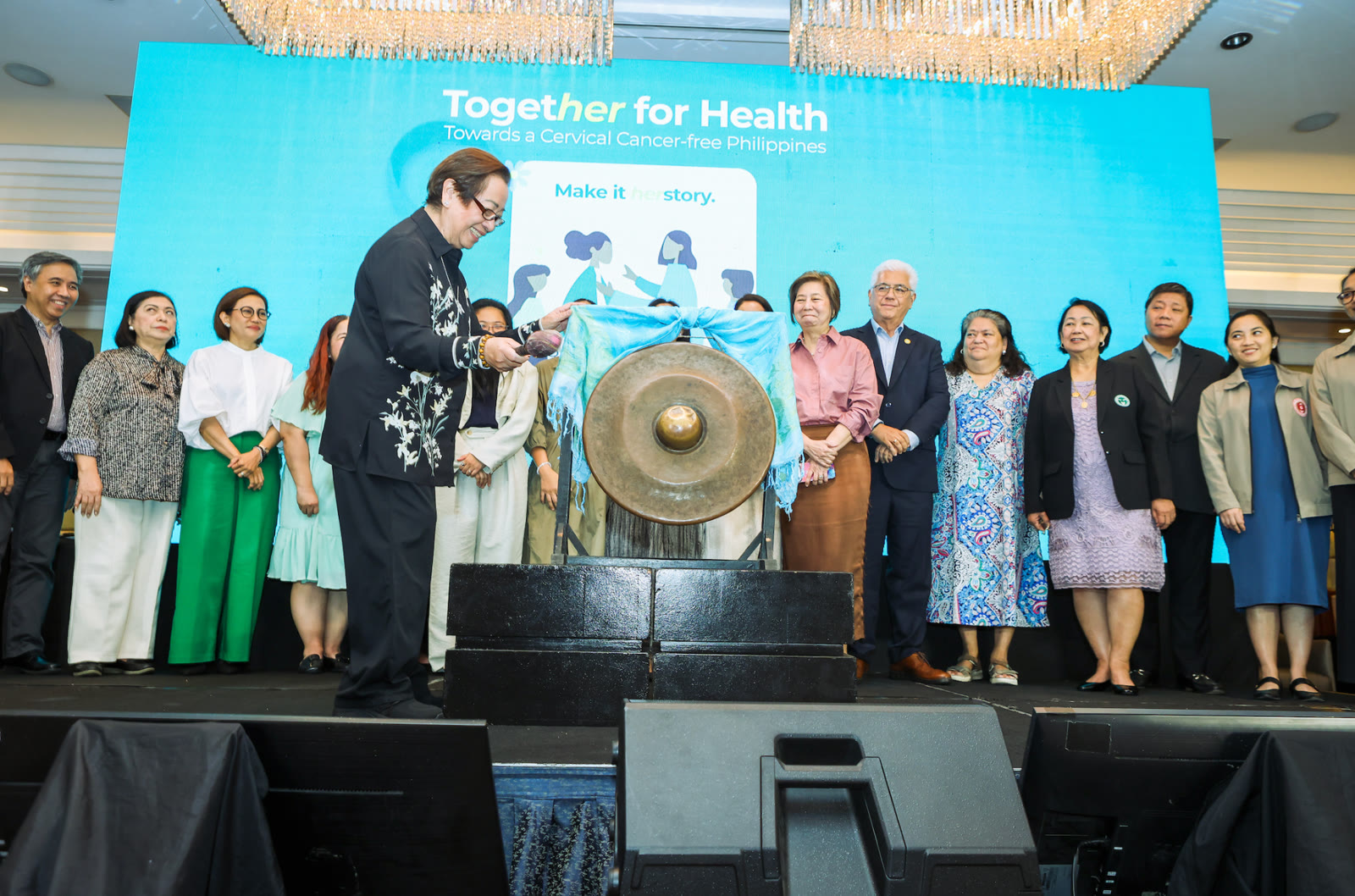
During the recent Together for Health: Towards a Cervical Cancer-Free Philippines forum, leaders from the Philippine Obstetrical and Gynecological Society (POGS), the Asia Oceania Federation of Obstetrics and Gynecology (AOFOG), patient advocates, and healthcare stakeholders emphasized a shared message: the science is already available. What remains is ensuring that more women benefit from it.
“We have the technical expertise and manpower. We have screening tools. We have subspecialists trained for treatment,” said Dr. Concepcion Rayel, President of POGS. “But most importantly, we need leadership to establish a clear roadmap, so we move in the same direction.”
The Advantage of Knowing the Cause
Unlike many cancers whose causes are influenced by multiple factors, cervical cancer has a well-established primary cause: persistent infection with high-risk types of human papillomavirus (HPV).
For Dr. Christia Padolina, Program Director for Cervical Cancer Elimination at AOFOG, this makes cervical cancer unique because healthcare systems already know where to intervene.
“Because we know the cause, we now have the tools to fight it, vaccines that can prevent HPV infection, screening tests that can detect it early, and treatments that can stop its progression to cancer,” Padolina said.
These tools form the foundation of the World Health Organization’s 90-70-90 strategy, which calls for 90% of girls to be vaccinated against HPV by age 15, 70% of women to undergo screening using high-performance tests, and 90% of women with cervical disease to receive appropriate treatment.
Taken together, these interventions have already shown results in countries that have invested heavily in prevention.
Prevention Works
Experts at the forum pointed to growing global evidence demonstrating that HPV vaccination can significantly reduce cervical cancer risk.
“HPV vaccination remains the optimal strategy for primary prevention,” said Dr. Ana Victoria Dy-Echo, Chair of the POGS Committee on Women’s Cancers.
She noted that countries with mature vaccination programs have already reported substantial declines in cervical cancer incidence among younger generations.
Beyond vaccination, screening remains equally critical. Detecting abnormal cervical changes before they progress to cancer allows women to receive treatment early, often before symptoms even appear.
Yet despite the availability of screening technologies, participation rates in the Philippines remain low. Experts noted that only around 1.27% to 1.29% of eligible women underwent cervical cancer screening last year.
For healthcare leaders, this highlights a central challenge: the country does not lack solutions, it needs broader access to them.
Turning Progress Into Reach
While advances in science have created unprecedented opportunities to prevent cervical cancer, experts acknowledge that implementation remains the next frontier.
Achieving elimination will require sustained collaboration among national government agencies, local governments, schools, healthcare professionals, patient groups, and communities.
“Successful programs usually begin with a strong national framework and commitment,” Padolina explained. “The Philippines already has many of the essential ingredients—from policy support and trained specialists to vaccines, screening tools, and treatment capability. The challenge now is implementation: making sure these reach women consistently, equitably, and at the right time.”
This means ensuring reliable vaccine supply, improving public awareness, strengthening screening programs, and expanding access for women in underserved communities.
As Cancer Coalition of the Philippines Vice President Carmen Auste emphasized, success should ultimately be measured not by national averages but by whether prevention and care reach those who often face the greatest barriers to healthcare.
The Path Forward
The message emerging from healthcare leaders is both urgent and hopeful.
Cervical cancer continues to claim thousands of Filipino lives every year. Yet unlike many other cancers, it is increasingly preventable through interventions that already exist today.
The challenge now is not discovering new solutions but accelerating the use of the ones already proven to work.
The Philippines has the science. It has the expertise. It has the tools.
The next step is ensuring that every Filipina has the opportunity to benefit from them.
PH-NON-01197
